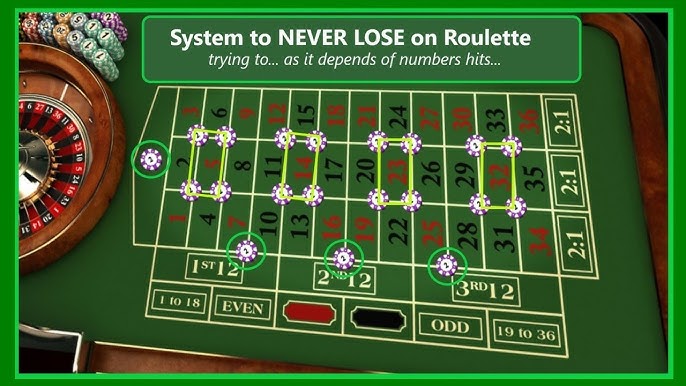
Betting systems attract roulette players like moths to flames. The promise of turning random outcomes into predictable profits sounds irresistible. Dozens of progression patterns claim they can beat the house through clever stake management. Martingale, D’Alembert, Fibonacci, Labouchere, each has devoted followers convinced they’ve found the secret. The uncomfortable truth is that none of these systems can overcome the mathematical house edge built into roulette’s payout structure.
Using stablecoins doesn’t magically make betting systems work better, but it does eliminate one variable. https://crypto.games/roulette/tether wagering keeps your stake values constant instead of fluctuating with crypto markets. This lets you focus purely on the system mechanics without currency price movements complicating your tracking. The systems still fail mathematically, but at least you can see exactly how and why they fail without ETH volatility obscuring the results.
D’Alembert system approach
Gentler than Martingale but still fundamentally flawed. Increase bets by one unit after losses, decrease by one unit after wins. The theory claims that wins and losses balance out eventually, leaving you ahead in the progression. Start at 10 USDT. Lose and go to 11. Lose again and hit 12. Win and drop back to 11. Win again, and you’re at 10. The slower escalation prevents the catastrophic stake growth Martingale produces. The problem is that wins and losses don’t balance out. You’re playing a negative expectation game where you lose 51.4% of even-money spins and win only 48.6%. The progression can’t fix this imbalance. Extended losing streaks still push the stakes higher while your bankroll drains. D’Alembert just kills you slower than Martingale, which some players mistake for effectiveness.
Fibonacci sequence application
This uses the famous mathematical sequence where each number equals the sum of the previous two: 1, 1, 2, 3, 5, 8, 13, 21, 34, 55. Move one step forward after losses. Move two steps back after wins. The theory claims the win/loss ratio makes this profitable long-term. It doesn’t. The math still grinds against you through that 2.7% house edge, applying to every single bet regardless of how you sequence them. Fibonacci grows slower than Martingale but faster than D’Alembert. You reach scary stake sizes during bad runs, but not quite as quickly. Ten consecutive losses starting at 1 USDT puts you at 89 USDT for the eleventh bet. You’ve spent 143 USDT total chasing that first 1 USDT loss. The appeal comes from the sophisticated appearance of using a mathematical sequence. Feels smarter than just doubling everything. You lose your money just the same, though.
Labouchere cancellation method
Also called the split Martingale or American progression. Write down a sequence like 1-2-3-4-5. Bet the sum of the first and last numbers (1+5=6). Win and cross off both numbers. Lose and add your bet amount to the end of the sequence. Keep going until you cross off all numbers, which theoretically gives you a profit equal to the sum of your original sequence. Looks clever on paper. Doesn’t work in practice because long losing streaks create sequences that spiral out of control, demanding huge stakes to complete. Your sequence may grow to 1-2-3-4-5-6-7-8-9-10-11 after several losses. Now you’re betting 1+11=12 units to continue the system. The sequence length and bet sizes explode during bad runs. You either abandon the system mid-sequence or keep playing until your bankroll evaporates, trying to complete it.
